


Dharmesh Shah argues that in the “agentic” AI era, success is no longer just about IQ...
We Welcome You to the Beginning of our Blog on Life, Marketing and Influence.
We will be exploring the intersection of living, persuasion and marketing. We will be exploring each word separately, but we recognize that at every point in our lives, we are also persuading and using marketing in our lives. These three are intertwined into our daily lives.
Every blog will be different, but all posts will focus on one aspect of Life, Marketing or Influence. Most often there will be an intersection between these three main topics. Hope you enjoy, subscribe and come back for more. Our hope is that you will be better prepared to make better decisions with the knowledge this blog intends to bring.
We breathe therefore we are alive and living. Each decision we make (mostly unconscientiously - you will learn a lot about that in this blog), is based on some sort of external or internal persuasion and persuasion is but a part of what marketing is all about.
The blog will use Dr. Daniel Kahneman's Thinking Fast and Slow, Robert Cialdini's book Influence and the Psychology of Persuasion and other books by Cialdini as well as others in the every increasing space of Neuroscience..
1. Living: The Experience of Thought and Action
What does it mean to truly "live" and make choices? Often, we believe we are experiencing reality exactly as it is, but we actually live through our own perception of reality, which is heavily filtered by our thoughts, biases, and internal systems. According to Neuroscience, our daily living is governed by a complex "value calculation" that happens seamlessly in our brains every single day. As Dr. Emily Falk points out, our brain’s value system is constantly assessing our options by asking, "What is the likely possibility for reward here?". It integrates our past experiences, current needs, and future goals, and weighs them against our self-image.
This self-relevance system is a core part of human life, evaluating everything we encounter as either "me" or "not me", "safe” or "not safe". When a choice aligns with an identity we take pride in, our brain naturally assigns it a much higher value, making the action feel like an extension of who we are rather than a forced chore. Furthermore, our living experience is deeply and fundamentally social. The social relevance system in our brain tracks what others think and feel, and our brains treat social connection and peer influence as primary rewards, processed similarly to food or money.
However, much of our psychological suffering and decision paralysis comes from the illusion of thought. We often conflate our thoughts (which are just spontaneous mental raw materials) with active overthinking, which consumes finite energy and triggers our fight-or-flight responses. Therefore, simply living and interacting with the world means we are constantly being influenced, evaluating our environment, and making fast, subconscious value judgments about what matters most.
2. Persuasion: The Fast and Slow Brain
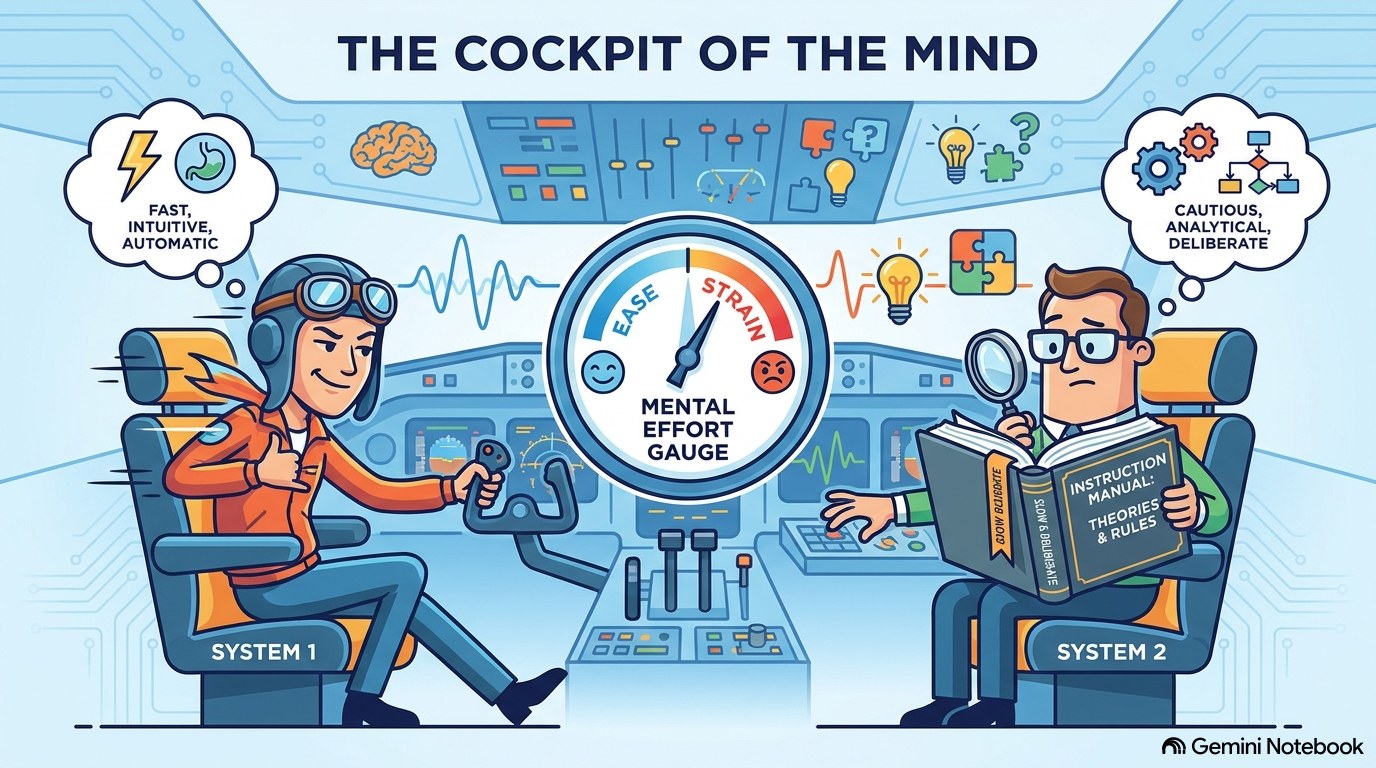
If living is the act of making these constant evaluations, persuasion is the art of influencing them. A significant portion of this blog will draw on the groundbreaking work of Dr. Daniel Kahneman in Thinking, Fast and Slow. Kahneman demonstrates that human beings possess two distinct cognitive subsystems that govern our reasoning: System 1 and System 2.
System 1 is fast, automatic, intuitive, emotional, and unconscious. It is our brain's autopilot, guiding the vast majority of our daily decisions because the brain instinctively prioritizes conserving energy. System 2, on the other hand, is slow, effortful, logical, and analytical, requiring significant cognitive load and attention.
Persuasion thrives almost entirely in the realm of System 1. Because our brains want to follow the path of least resistance, we rely heavily on mental shortcuts, or heuristics. One crucial concept here is "Cognitive Ease". Our brains prefer things that are familiar, simple to understand, and easy to process. When an idea or a message induces cognitive ease, we feel safe and are much more likely to accept it as true, which is why frequent repetition of an idea makes it highly persuasive.
Furthermore, our fast-thinking brains are susceptible to various cognitive biases that shape our beliefs. For instance:
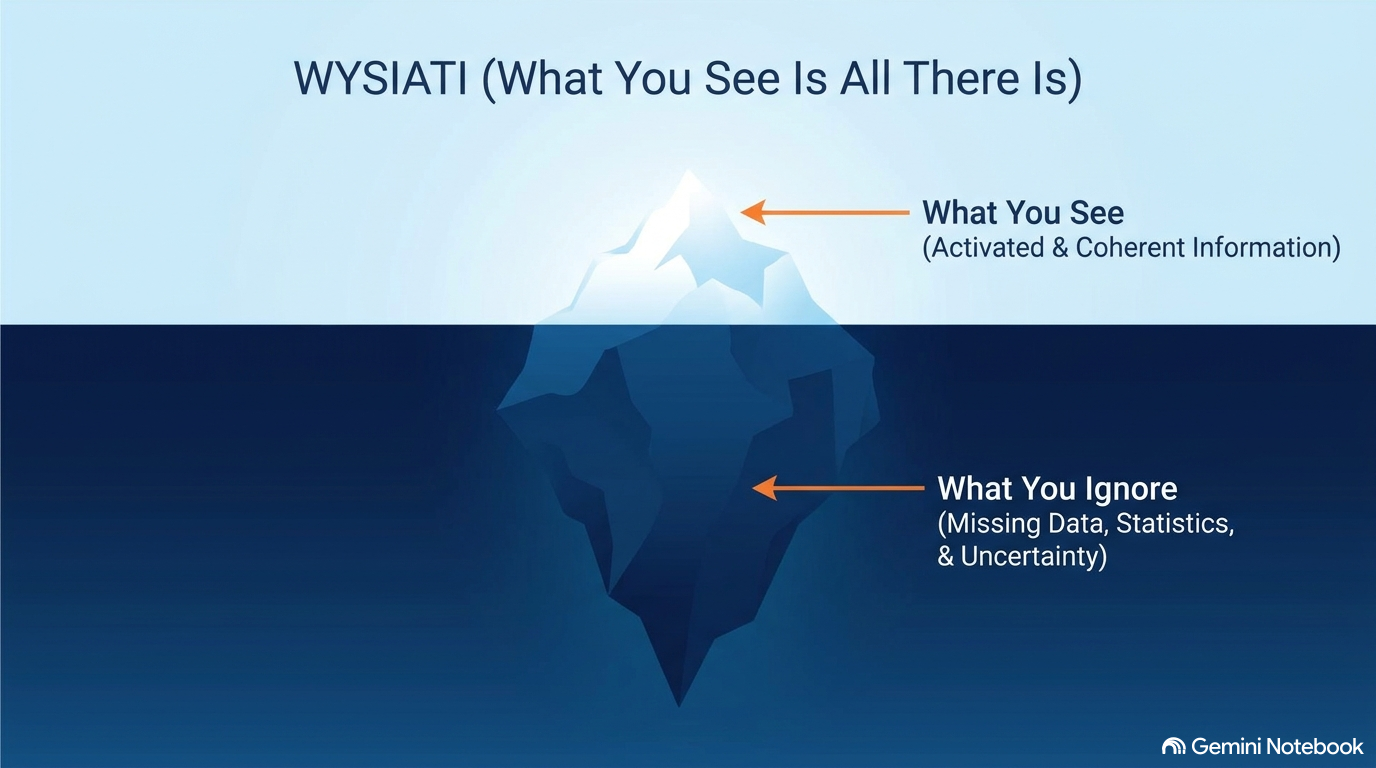
- WYSIATI (What You See Is All There Is): We jump to conclusions based only on the immediate information available to us, completely ignoring what we might not know.
- Confirmation Bias: We actively seek out information that supports our existing beliefs while brushing off contradictory evidence.
- Base Rate Neglect: When judging the likelihood of an event, we overvalue what "feels" right intuitively and undervalue actual historical statistics.
- The Sunk Cost Fallacy: Our tendency to follow through with an action—even when it no longer makes rational sense—simply because we are influenced by the time, money, or effort we have already invested.
- Framing: This proves that our opinions and choices can change drastically based simply on how information is presented. Stating that a medical procedure has a "90% survival rate" is far more persuasive and reassuring than saying it has a "10% mortality rate," despite the factual outcome being identical.
3. Marketing: Applying Persuasion in the Real World
Marketing is simply the practical, commercial application of persuasion. By understanding the mechanics of System 1 and our brain's value calculations, marketers engineer environments, copy, and designs that gently nudge us toward a purchase. Marketing relies heavily on behavioral economics to reduce friction and encourage specific consumer behaviors.
For example, scientific research on ad creatives reveals that even the visual orientation of a product can powerfully persuade us. Placing a product image on the bottom-right side of an advertisement subconsciously makes the product appear heavier, sturdier, and more valuable. Using slanted fonts that lean to the right creates a sense of urgency and energy, making them perfect for limited-time promotions. When using video marketing, slow-motion shots are utilized for luxury or pleasurable products because slow movement makes us think abstractly about quality, whereas fast-paced videos are used to highlight concrete features and low prices.
Marketers also use the "power of three" in persuasive copywriting. Research shows that listing exactly three positive claims about a product maximizes persuasiveness; adding a fourth claim actually triggers skepticism and alarms the analytical System 2, undermining the entire message.
Furthermore, marketing expertly leverages the concept of framing in pricing and promotions. If a store is running a site-wide sale, framing the discount as a percentage (e.g., "15% off") removes limits and triggers a mindset where consumers feel that "the more they spend, the more they save". Conversely, for specific products, offering a dollar amount off (e.g., "$10 off") highlights the tangible loss they will experience if they do not purchase, tapping into our natural "Loss Aversion".
Even the word "free" is strategically manipulated. Studies show that phrasing an offer as "For $0" or "At no cost" is significantly more effective than saying "For free," because "$0" reminds the fast-thinking brain that it is actively saving money. Finally, offering a slightly inferior but similarly priced "decoy" plan alongside a target product makes the main product seem like an incredible deal, effectively boosting sales by guiding the consumer's fast-thinking brain to an easy, comparative conclusion.
Conclusion
Living, persuasion, and marketing are not isolated concepts; they operate as a continuous, interconnected loop. Our daily living is dictated by our internal value systems and fast-thinking brains. Persuasion is the psychological language that speaks directly to those systems. Marketing is the strategic, environmental deployment of that language in our modern society. As we dive deeper into these topics in future posts, you will begin to see these invisible forces at play in every aspect of your daily experience.
References:
- Thinking, Fast and Slow by Daniel Kahneman: https://en.wikipedia.org/w/index.php?title=Thinking,_Fast_and_Slow
- What We Value: The Neuroscience of Choice and Change by Emily Falk: https://www.asc.upenn.edu/research/centers/communication-neuroscience-lab
- Dual process theory (moral psychology): https://en.wikipedia.org/w/index.php?title=Dual_process_theory_(moral_psychology)
- Cognitive bias modification: https://en.wikipedia.org/w/index.php?title=Cognitive_bias_modification